Buy immobilienfinanzierungen.eu ?
We are moving the project
immobilienfinanzierungen.eu .
Are you interested in purchasing the domain
immobilienfinanzierungen.eu ?
domain@kv-gmbh.de · 0541-91531010
Buy immobilienfinanzierungen.eu ?
What is Freemasonry?
Freemasonry is a fraternal organization that traces its origins back to the stonemason guilds of the Middle Ages. It is based on the principles of brotherhood, morality, and charity, and members are encouraged to improve themselves through self-reflection and service to others. Freemasonry is known for its rituals, symbols, and degrees of initiation, which are meant to impart moral and philosophical teachings to its members. It is a worldwide organization with a long history and a strong tradition of secrecy. **
How did Freemasonry originate?
Freemasonry originated in the late 16th to early 17th centuries in Scotland and England. It evolved from the guilds of stonemasons who built the castles and cathedrals of the Middle Ages. These stonemasons formed secret societies to pass down their trade secrets and traditions. Over time, Freemasonry expanded to include non-masons and evolved into a fraternal organization focused on moral and ethical teachings. **
Similar search terms for Freemasonry
Top-Angebote
Products related to Freemasonry:

-
Can Freemasonry be Christian?
Freemasonry is a fraternal organization that is open to men of all religious beliefs, including Christianity. While Freemasonry itself is not a religion, it does require its members to have a belief in a higher power. This belief can be interpreted in various ways, including through the lens of Christianity. Many Christian men are members of Freemasonry and find that the values and teachings of the organization align with their Christian beliefs. However, some Christian denominations have expressed concerns about Freemasonry's compatibility with Christianity, citing its secrecy and ritualistic practices. Ultimately, whether Freemasonry can be considered Christian is a matter of personal interpretation and belief. **
-
How does one join Freemasonry?
To join Freemasonry, one must typically be a man of good character who believes in a higher power. Interested individuals can reach out to a local Masonic lodge and express their desire to join. They will then go through a process of meeting with lodge members, submitting an application, and being interviewed. If accepted, they will go through an initiation ceremony to become a Freemason. **
-
How has Freemasonry changed you?
Freemasonry has had a profound impact on me by instilling a sense of brotherhood, unity, and moral values. Through the teachings and rituals of Freemasonry, I have learned the importance of self-improvement, charity, and service to others. It has helped me become a better person by encouraging me to strive for personal growth and to contribute positively to my community. Overall, Freemasonry has enriched my life by providing me with a supportive network of like-minded individuals and guiding me towards a path of moral and spiritual development. **
-
How can one join Freemasonry?
To join Freemasonry, one must typically be a man of at least 18 years of age (in most jurisdictions) who believes in a higher power. One can start by reaching out to a local Masonic lodge and expressing interest in becoming a member. The process usually involves submitting an application, being interviewed by members of the lodge, and ultimately being voted on by the existing members. If accepted, the individual will go through an initiation ceremony to become a Freemason. **
Is there still Christian Freemasonry?
Yes, there are still Christian Freemasonry organizations in existence today. These organizations are typically open to Freemasons who profess a belief in Christianity and incorporate Christian symbolism and teachings into their rituals and ceremonies. Christian Freemasonry emphasizes the importance of faith in God and often includes references to biblical figures and stories in their practices. While Christian Freemasonry is not as widespread as traditional Freemasonry, it continues to be practiced by those who wish to combine their Masonic beliefs with their Christian faith. **
Are you interested in Freemasonry?
As an AI, I do not have personal interests or beliefs. However, I can provide information about Freemasonry and its history, beliefs, and practices if you are interested. **
Top-Angebote
Products related to Freemasonry:
-
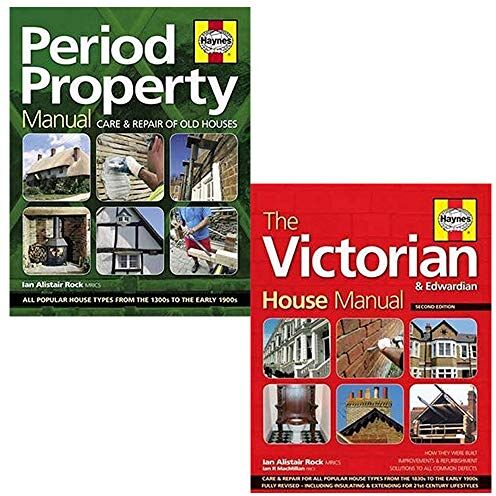
J H Haynes & Co Ltd Haynes Property Manual 2 Books Collection Set (The Victorian House, Period Property)The Victorian House Manual The Victorian House Manual (2nd Edition): How They Were Built, Improvements & Refurbishment, Solutions to All Common Defects Thinking of buying a Victorian or Edwardian house? Or maybe you already own one? Either way, this clearly written manual explains all you need to know about the care and repair of these classic properties. Today, many houses of this age are in need of extensive updating and maintenance, having suffered years of neglect. Some have been damaged by misguided home improvements or botched repairs using the wrong materials. Even newly refurbished properties can sometimes conceal dangerous structural alterations and shoddy build-quality. This unique manual provides detailed, expert advice, backed up with clear how to colour photographs, describing where to check for the critical danger signs and how to fix all common defects. Period Property Britain has a wonderfully rich stock of period houses - everything from medieval cottages to Georgian townhouses and Edwardian mansions. But many of these historic properties are now at risk. Some are unwittingly damaged by well-meaning owners or incompetent builders; others suffer long-term deterioration where mortgage lenders have imposed quick-fix 'remedies'. Despite being some of the most sustainable buildings on the planet, many old houses are now being subjected to ill-advised works to upgrade thermal efficiency, resulting in the destruction of the very qualities that make them so appealing, slashing their values. Haynes have come to the rescue with this clearly written, lavishly illustrated manual explaining the correct approach to care and repair - covering the full range of traditional materials. Every old house has a story to tell, so Haynes also show how to explore your home's history and strip back modern finishes to reveal long lost original features. This comprehensive manual is essential reading whether you want to get your hands dirty or just want to understand how old houses work and how to go about employing specialist craftsmen.19,99 £*Shipping: 2,99 £Secure redirect to the provider
-
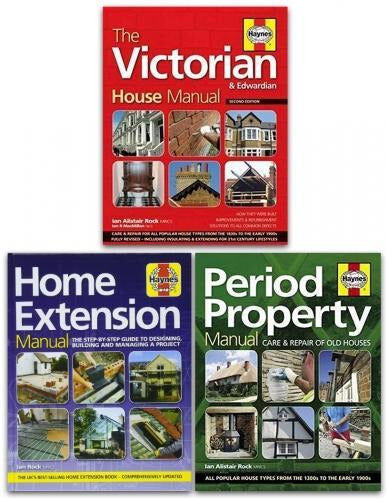
J H Haynes & Co Ltd Haynes Property Manual 3 Books Collection Set Home Extension The Victorian House Period PropertyTitles In this Set: The Victorian House Manual Home Extension Period Property The Victorian House Manual The Victorian House Manual (2nd Edition): How They Were Built, Improvements & Refurbishment, Solutions to All Common Defects Thinking of buying a Victorian or Edwardian house? Or maybe you already own one? Either way, this clearly written manual explains all you need to know about the care and repair of these classic properties. Today, many houses of this age are in need of extensive updating and maintenance, having suffered years of neglect. Some have been damaged by misguided home improvements or botched repairs using the wrong materials. Even newly refurbished properties can sometimes conceal dangerous structural alterations and shoddy build-quality. This unique manual provides detailed, expert advice, backed up with clear how to colour photographs, describing where to check for the critical danger signs and how to fix all common defects. Home ExtensionMany people are looking at ways to extend their homes rather than move house, but `getting the builders in' can be a recipe for disaster unless you really know what you are doing. Whether you plan to employ a building contractor or tackle some of the works yourself, this best-selling manual will show you how to stay firmly in control, resulting in a high-quality extension, completed on time and within budget. This new edition will include all the up-do-date information on complying with the latest Building Regs and Planning requirements, CAD design, energy-efficiency, under floor heating, bi-folds, liquid screeds, woodburning stoves and renewable energy. Period Property Britain has a wonderfully rich stock of period houses - everything from medieval cottages to Georgian townhouses and Edwardian mansions. But many of these historic properties are now at risk. Some are unwittingly damaged by well-meaning owners or incompetent builders; others suffer long-term deterioration where mortgage lenders have imposed quick-fix 'remedies'. Despite being some of the most sustainable buildings on the planet, many old houses are now being subjected to ill-advised works to upgrade thermal efficiency, resulting in the destruction of the very qualities that make them so appealing, slashing their values. Haynes have come to the rescue with this clearly written, lavishly illustrated manual explaining the correct approach to care and repair - covering the full range of traditional materials. Every old house has a story to tell, so Haynes also show how to explore your home's history and strip back modern finishes to reveal long lost original features. This comprehensive manual is essential reading whether you want to get your hands dirty or just want to understand how old houses work and how to go about employing specialist craftsmen.24,99 £*Shipping: 2,99 £Secure redirect to the provider
-
What is Freemasonry?
Freemasonry is a fraternal organization that traces its origins back to the stonemason guilds of the Middle Ages. It is based on the principles of brotherhood, morality, and charity, and members are encouraged to improve themselves through self-reflection and service to others. Freemasonry is known for its rituals, symbols, and degrees of initiation, which are meant to impart moral and philosophical teachings to its members. It is a worldwide organization with a long history and a strong tradition of secrecy. **
-
How did Freemasonry originate?
Freemasonry originated in the late 16th to early 17th centuries in Scotland and England. It evolved from the guilds of stonemasons who built the castles and cathedrals of the Middle Ages. These stonemasons formed secret societies to pass down their trade secrets and traditions. Over time, Freemasonry expanded to include non-masons and evolved into a fraternal organization focused on moral and ethical teachings. **
-
Can Freemasonry be Christian?
Freemasonry is a fraternal organization that is open to men of all religious beliefs, including Christianity. While Freemasonry itself is not a religion, it does require its members to have a belief in a higher power. This belief can be interpreted in various ways, including through the lens of Christianity. Many Christian men are members of Freemasonry and find that the values and teachings of the organization align with their Christian beliefs. However, some Christian denominations have expressed concerns about Freemasonry's compatibility with Christianity, citing its secrecy and ritualistic practices. Ultimately, whether Freemasonry can be considered Christian is a matter of personal interpretation and belief. **
-
How does one join Freemasonry?
To join Freemasonry, one must typically be a man of good character who believes in a higher power. Interested individuals can reach out to a local Masonic lodge and express their desire to join. They will then go through a process of meeting with lodge members, submitting an application, and being interviewed. If accepted, they will go through an initiation ceremony to become a Freemason. **
Similar search terms for Freemasonry
-
How has Freemasonry changed you?
Freemasonry has had a profound impact on me by instilling a sense of brotherhood, unity, and moral values. Through the teachings and rituals of Freemasonry, I have learned the importance of self-improvement, charity, and service to others. It has helped me become a better person by encouraging me to strive for personal growth and to contribute positively to my community. Overall, Freemasonry has enriched my life by providing me with a supportive network of like-minded individuals and guiding me towards a path of moral and spiritual development. **
-
How can one join Freemasonry?
To join Freemasonry, one must typically be a man of at least 18 years of age (in most jurisdictions) who believes in a higher power. One can start by reaching out to a local Masonic lodge and expressing interest in becoming a member. The process usually involves submitting an application, being interviewed by members of the lodge, and ultimately being voted on by the existing members. If accepted, the individual will go through an initiation ceremony to become a Freemason. **
-
Is there still Christian Freemasonry?
Yes, there are still Christian Freemasonry organizations in existence today. These organizations are typically open to Freemasons who profess a belief in Christianity and incorporate Christian symbolism and teachings into their rituals and ceremonies. Christian Freemasonry emphasizes the importance of faith in God and often includes references to biblical figures and stories in their practices. While Christian Freemasonry is not as widespread as traditional Freemasonry, it continues to be practiced by those who wish to combine their Masonic beliefs with their Christian faith. **
-
Are you interested in Freemasonry?
As an AI, I do not have personal interests or beliefs. However, I can provide information about Freemasonry and its history, beliefs, and practices if you are interested. **
* All prices are inclusive of VAT and, if applicable, plus shipping costs. The offer information is based on the details provided by the respective shop and is updated through automated processes. Real-time updates do not occur, so deviations can occur in individual cases. ** Note: Parts of this content were created by AI.